Cat Howell - Low Ticket Ads Bundle 2026
by Cat Howell
Low ticket Facebook and Instagram ads offer a powerful way to sell digital products priced between $17 and $97 with consistent profitability. By using a simple campaign structure, optimized creatives, and a streamlined sales funnel, you can generate daily sales without large ad budgets or complex setups. This strategy focuses on lowering acquisition costs, improving conversions, and turning small offers into long-term revenue streams. Perfect for beginners and experienced marketers alike, low ticket ads help you build a scalable system that runs continuously, attracts the right audience, and converts them into loyal customers while maximizing return on ad spend.
Read more ↓Get this course plus 117+ more with Lifetime Access.
Get Lifetime Access – $997-day money-back guarantee · Refund Policy
WHAT'S INSIDE
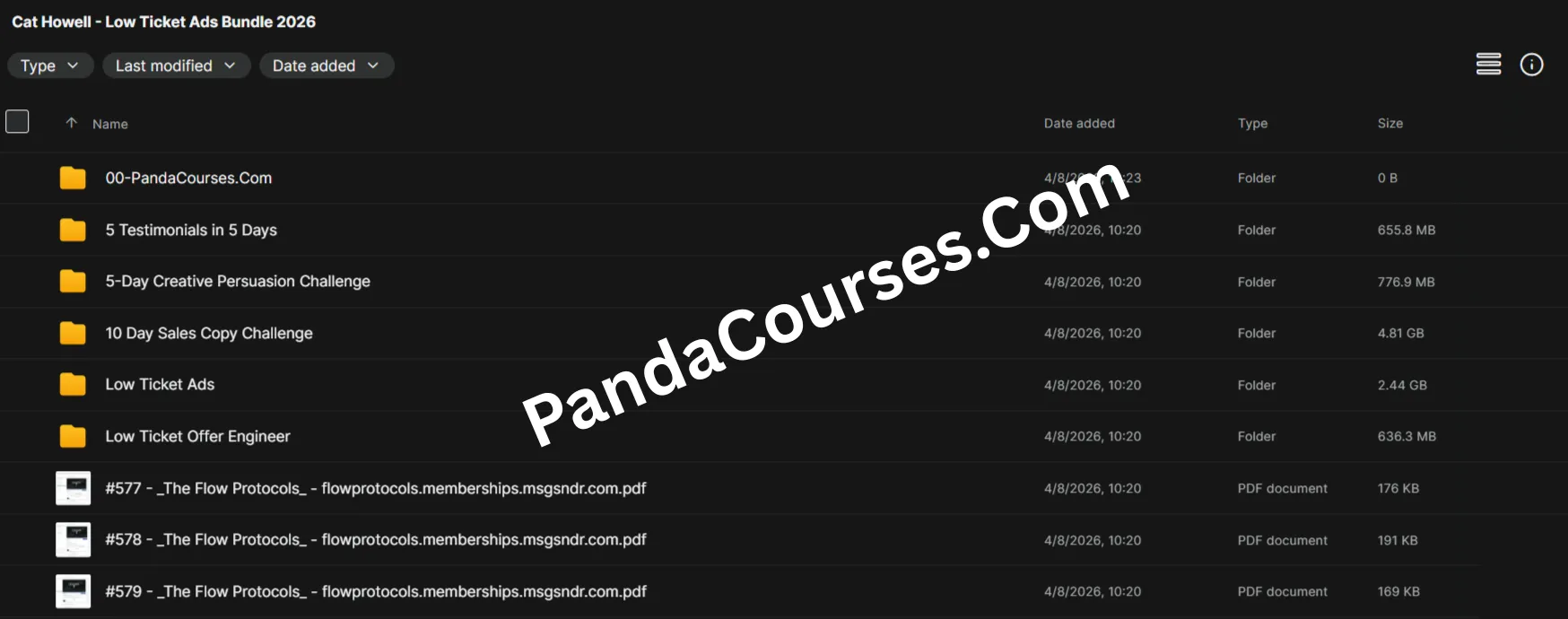
Preview of the course materials.
Course Details
Low ticket ads are designed to sell affordable digital products typically priced between $17 and $97 using paid advertising platforms like Facebook and Instagram. These offers often include ebooks, mini-courses, or short challenges that are easy to purchase without heavy consideration.
Unlike high-ticket funnels, low ticket ad strategies focus on volume, speed, and simplicity. The goal is to create a consistent stream of small purchases that compound into significant revenue over time.
Why Most Low Ticket Ads Fail
Poor Campaign Structure
Most marketers overcomplicate their campaigns. They either test too many variables at once or rely on outdated “guru” templates that no longer work. This leads to wasted ad spend and poor results.
Incorrect Tracking Setup
Using standard pixel tracking without optimization can cost you money. Many advertisers fail to implement smarter tracking methods, which results in inaccurate data and poor scaling decisions.
Weak Offer Positioning
Even if your product is good, poor messaging can kill conversions. If your audience doesn’t immediately understand the value, they won’t buy—especially at scale.
The Simple Meta Ad Strategy That Works
Minimal Budget, Maximum Impact
You don’t need thousands of dollars to test ads. A lean strategy—starting as low as $3 per day—can help you gather data, train your pixel, and identify winning creatives without risking large budgets.
This approach allows you to:
Reduce cost per acquisition (CPA)
Build a warm audience over time
Optimize campaigns gradually
Focus on One Clear Objective
Instead of running multiple campaigns, focus on a single goal: conversions. Keep your structure simple:
1 Campaign
1–2 Ad Sets
2–3 Creatives
This eliminates confusion and gives the algorithm clear direction.
The Creative That Converts
Avoid Overused Templates
Generic ad templates are overused and often ignored by audiences. Instead, focus on authenticity and clarity.
High-performing creatives usually:
Speak directly to a pain point
Show a clear transformation
Use simple, conversational language
Hook Matters Most
Your first 3 seconds determine everything. If your hook doesn’t grab attention, the rest of your ad won’t matter.
Examples of strong hooks:
“Why your ads aren’t converting…”
“The $3/day strategy no one talks about…”
“How I sell digital products daily without being online…”
Building a Profitable Low Ticket Funnel
Step 1: Simple Sales Page
Your sales page doesn’t need to be complex. Focus on:
Clear headline
Strong value proposition
Simple checkout process
Avoid unnecessary distractions that reduce conversions.
Step 2: Conversion Optimization
Even small tweaks can significantly increase your revenue. Split testing elements like:
Headlines
Pricing
Call-to-action buttons
can instantly improve your conversion rate.
Step 3: Backend Monetization
The real profit comes after the first sale. A low ticket offer should act as an entry point into a larger ecosystem.
Backend strategies include:
Upsells
Email marketing sequences
Higher-ticket offers
This is how small offers turn into scalable businesses.
How to Get Paid to Acquire Customers
One of the most powerful concepts in low ticket advertising is breaking even on the front end.
If your ad spend equals your revenue from initial sales, you’re essentially acquiring customers for free. From there, all backend sales become pure profit.
This requires:
Tight cost control
High-converting offers
Strategic upsells
Understanding Your Ad Metrics
Key Metrics to Watch
To scale successfully, you need to track the right data:
Cost per purchase (CPP)
Click-through rate (CTR)
Conversion rate
Return on ad spend (ROAS)
Optimization Strategy
If your ads aren’t performing:
Test new creatives first
Then adjust targeting
Finally, tweak your funnel
Most people do this in the wrong order, which wastes time and money.
The Power of Audience Activation
Why People Don’t Buy
Even interested users often don’t purchase immediately. This is where strategic content and follow-up come in.
Use Sales Copy Frameworks
A proven content system helps position your offer in a way that makes people want to buy. This includes:
Emotional triggers
Clear benefits
Strong calls to action
Consistent messaging builds trust and increases conversions over time.
Beginner-Friendly Setup
One of the biggest advantages of low ticket ads is simplicity. You don’t need:
Advanced tech skills
Expensive software
Complex funnels
A basic setup with a solid offer and clear messaging is enough to start generating results.
Final Thoughts
Low ticket Facebook and Instagram ads are one of the most efficient ways to generate consistent revenue from digital products. But most people fail because they overcomplicate the process or follow outdated strategies.
If you focus on:
Simple campaign structure
Strong creatives
Clear funnel design
Smart optimization
you can build a system that runs continuously—even when you’re not actively working.
The real opportunity isn’t just in selling low ticket products. It’s in using them to build a scalable, profitable ecosystem that grows over time.
What Our Customers Say
Real feedback from real customers.
Tap a screenshot to enlarge.
Get all 117+ courses with one payment
Lifetime access. New courses included.
7-day money-back guarantee · Refund Policy