
Yash Gajjar - The Sales Impact
by Yash Gajjar
Mastering high-ticket sales doesn’t require talent it requires the right system. This guide reveals a simple, proven formula to close premium deals consistently by focusing on qualification, authority, and strategic communication. Learn how to identify ideal prospects, handle objections with confidence, and present offers that feel like the only logical solution. Backed by real-world training, coaching, and sales call insights from founders who scaled to $100K/month before 21, this approach is built for results—not theory. Whether you’re a beginner or looking to level up, this framework helps you close deals predictably and turn high-value conversations into consistent revenue.
Read more ↓Get this course plus 117+ more with Lifetime Access.
Get Lifetime Access – $997-day money-back guarantee · Refund Policy
WHAT'S INSIDE
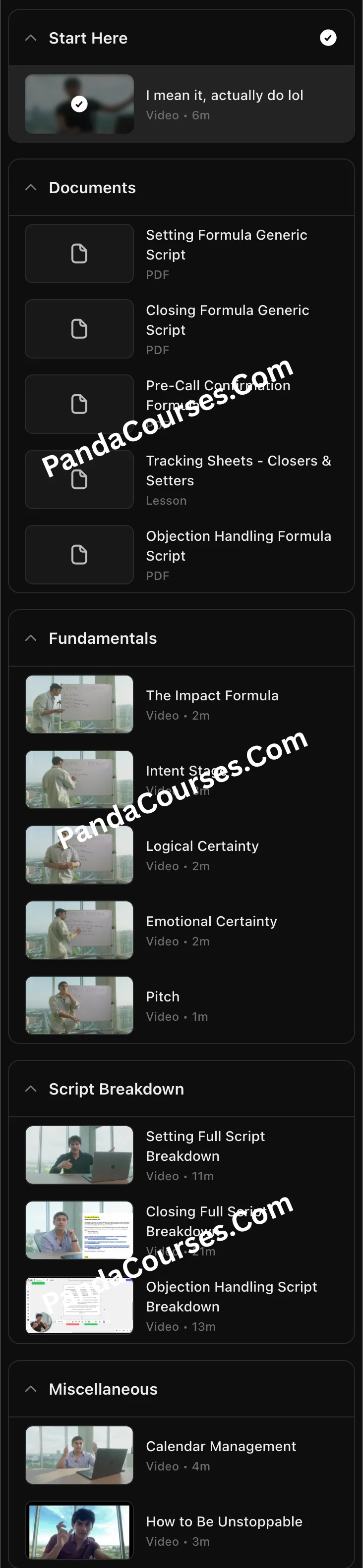
Preview of the course materials.
Course Details
Closing high-ticket deals isn’t about luck, charisma, or aggressive selling—it’s about structure, psychology, and repeatable systems. Most beginners fail because they treat sales like improvisation instead of execution. If you want consistent results, you need a formula that works every single time.
This guide breaks down a proven approach to high-ticket sales, combined with training, coaching, and real call insights from founders who scaled past $100K/month before turning 21.
What Are High-Ticket Deals?
High-ticket deals refer to products or services priced significantly higher than average—typically ranging from $1,000 to $10,000 or more. These require deeper trust, stronger positioning, and a more strategic sales process.
Unlike low-ticket sales, where volume matters, high-ticket sales rely on:
Strong qualification
Emotional connection
Value-based communication
Clear transformation outcomes
The Simple Formula to Close High-Ticket Deals
Step 1: Identify the Right Prospect
Not everyone is your customer—and that’s where most people fail. You don’t need more leads; you need better leads.
Focus on:
Pain intensity (urgent problems convert faster)
Financial capability
Decision-making authority
If you’re pitching to someone who can’t afford or doesn’t need your solution, you’re wasting time.
Step 2: Build Authority Early
High-ticket buyers don’t trust easily. You must establish authority within the first few minutes.
Ways to do this:
Share results (yours or your clients’)
Demonstrate expertise through insights
Control the conversation flow
Authority isn’t about bragging—it’s about positioning yourself as someone who understands the problem better than they do.
Step 3: Diagnose Before You Sell
Most salespeople jump into pitching too early. That’s a mistake.
Instead:
Ask deep, structured questions
Understand their current situation
Identify pain points and consequences
Your goal is to make the prospect clearly see the gap between where they are and where they want to be.
Step 4: Present the Solution Strategically
Once you fully understand the problem, present your offer as the only logical solution.
Key principles:
Focus on outcomes, not features
Tie your solution directly to their pain
Keep it simple and clear
Avoid overwhelming the prospect. Simplicity closes deals.
Step 5: Handle Objections Like a Pro
Objections are not rejections—they are buying signals.
Common objections include:
“It’s too expensive”
“I need to think about it”
“I’m not sure if it will work”
Instead of pushing harder:
Acknowledge their concern
Reframe the value
Bring them back to their original problem
Step 6: Close With Confidence
Closing is not a separate step—it’s the natural outcome of a well-executed process.
When done right:
The prospect already believes in the solution
The decision feels obvious
Resistance is minimal
Your job is simply to guide them to the final decision.
Why Training and Coaching Matter
You can’t master high-ticket sales by guessing. You need exposure to real scenarios, feedback, and proven frameworks.
Sales Call Recordings
One of the fastest ways to improve is by analyzing real sales calls. You’ll learn:
How top closers structure conversations
How they handle objections in real time
What mistakes to avoid
Watching real interactions gives you practical understanding—not just theory.
Structured Coaching
Coaching accelerates your growth by:
Identifying your blind spots
Refining your communication style
Providing accountability
Without feedback, you’ll repeat the same mistakes.
Placement Opportunities
Learning is important, but applying it is where real growth happens.
Placement support helps you:
Get real sales experience
Work with actual clients
Earn while you learn
This bridges the gap between knowledge and execution.
What Is Impact Team?
Overview
Impact Team is a training and coaching system designed to help individuals master high-ticket sales. It combines education, mentorship, and practical exposure.
Core Focus
High-ticket closing frameworks
Live call analysis and breakdowns
Hands-on coaching
Real-world placement opportunities
The goal is not just to teach sales—but to help you actually earn from it.
Main Program vs VIP: What’s the Difference?
Main Program
The main program focuses on:
Core sales fundamentals
Proven closing frameworks
Access to training materials
It’s designed for those who want to build a strong foundation.
VIP Program
VIP offers a more advanced experience:
Personalized coaching
Deeper call reviews
Priority support
Faster skill development
If you want accelerated results, VIP is the better option.
Why Should You Listen to Them?
Proven Results
The founders have generated over $100K/month before the age of 21. That’s not theory—it’s execution.
Real Experience
They’ve:
Closed high-ticket deals themselves
Built systems that scale
Trained others to achieve results
This isn’t recycled information—it’s based on real-world performance.
Practical Approach
Most programs focus on motivation. This one focuses on:
Systems
Scripts
Execution
You’re not just learning—you’re applying.
Final Thoughts
High-ticket sales is a skill that can completely change your income trajectory—but only if you approach it correctly.
Stop:
Chasing random leads
Using generic scripts
Guessing your way through calls
Start:
Following a structured formula
Learning from real examples
Practicing consistently
If you master the process, closing high-ticket deals becomes predictable—not random.
What Our Customers Say
Real feedback from real customers.
Tap a screenshot to enlarge.
Get all 117+ courses with one payment
Lifetime access. New courses included.
7-day money-back guarantee · Refund Policy