
The Ad Creative Course - Teaching you how to make better Ads
by The Ad Creative
Performance ad creative plays a critical role in helping DTC brands scale revenue in competitive digital markets. This article explores how strategic creative production—ranging from high-production campaigns to authentic user-generated content (UGC) and static ads—drives measurable results. It highlights the importance of data-driven testing, strong hooks, and audience-focused messaging in building ads that convert. By implementing a structured creative testing framework, brands can continuously discover winning concepts and improve performance. Learn how professional creative teams develop scalable systems that consistently generate high-converting ads, reduce acquisition costs, and support long-term growth for modern direct-to-consumer brands operating across today’s fast-moving advertising platforms.
Read more ↓Get this course plus 117+ more with Lifetime Access.
Get Lifetime Access – $997-day money-back guarantee · Refund Policy
WHAT'S INSIDE
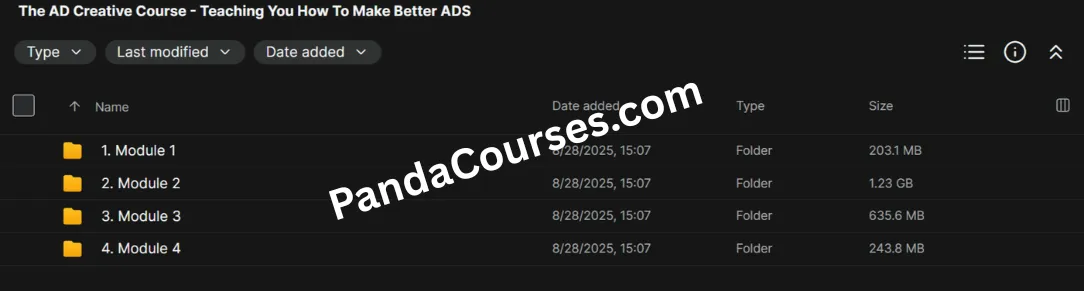
Preview of the course materials.
Course Details
In today’s competitive digital marketing landscape, ad creative is one of the most powerful growth levers for Direct-to-Consumer (DTC) brands. Even the most sophisticated targeting or media buying strategy will fail if the creative itself does not capture attention and convert viewers into customers.
High-performing ad creative blends data, storytelling, and performance marketing principles. When done correctly, it can dramatically increase click-through rates, reduce customer acquisition costs, and unlock scalable revenue growth.
Fraser, a seasoned professional in ad creative strategy, leads a team at Fraggell that collaborates with some of the world’s leading DTC brands. Their focus is simple: build performance-driven creative systems that scale revenue efficiently.
Understanding Performance Creative
What Is Performance Creative?
Performance creative refers to advertising content designed specifically to drive measurable business results, such as conversions, purchases, or leads.
Unlike traditional brand advertising that prioritizes awareness, performance creative is built around data-driven testing and optimization.
Key Characteristics of High-Performing Ad Creative
Successful performance creative typically includes:
Clear and compelling messaging
Strong visual hooks within the first few seconds
Audience-focused storytelling
Direct response elements such as offers or urgency
Continuous testing and iteration
Brands that consistently scale their revenue usually have structured creative testing systems rather than relying on single “winning ads”.
Types of Ad Creative Used by Top DTC Brands
1. High-Production Creative
High-production creative involves professionally produced video or photo content with strong cinematic quality, lighting, and editing.
These ads are often used for:
Brand storytelling
Product demonstrations
Launch campaigns
Premium positioning
While high-production content requires more investment, it helps brands build trust and authority, especially in competitive industries.
2. User-Generated Content (UGC)
UGC ads have become a dominant format in performance marketing because they feel authentic and relatable.
These ads often feature:
Real customers using the product
Creator testimonials
Problem-solution storytelling
Casual and native platform style
Platforms like social media reward content that feels organic rather than overly polished, which is why UGC often outperforms traditional advertisements.
3. Static Ads
Static ads are simple image-based creatives that focus on clear messaging and strong visual design.
They are particularly effective for:
Retargeting campaigns
Promotional offers
Product highlights
Quick A/B testing
Although static ads are simpler than video, they remain a critical part of a scalable creative strategy.
The Creative Testing Framework
Why Testing Is Essential
Many brands make a major mistake: they try to find a single winning ad.
In reality, successful DTC brands run structured creative testing systems that continuously produce and evaluate new variations.
Testing allows brands to identify:
Winning hooks
High-converting messaging angles
Visual formats that resonate with the audience
Without consistent testing, scaling ad performance becomes extremely difficult.
Core Elements to Test
A strong creative testing framework usually experiments with:
Hooks
The hook is the first few seconds of an ad that capture attention. If the hook fails, the rest of the ad will not matter.
Examples include:
Problem-based hooks
Curiosity hooks
Bold claims or statistics
Before-and-after visuals
Messaging Angles
Different audiences respond to different messaging angles, such as:
Pain point solutions
Lifestyle benefits
Product features
Social proof or testimonials
Testing multiple angles helps identify the most persuasive narrative for your target audience.
Creative Formats
Creative formats can include:
Short-form videos
UGC clips
Slideshows
Static images
Motion graphics
Each platform and audience segment may respond differently, making format testing essential.
Building a Scalable Creative System
Consistency Over One-Off Wins
The biggest difference between struggling brands and high-growth DTC companies is consistency in creative production.
Instead of producing ads sporadically, top brands create ongoing creative pipelines that generate new concepts weekly.
This approach ensures:
Constant performance improvements
Faster learning cycles
More scalable ad campaigns
Creative Teams and Workflows
Scaling creative production requires structured collaboration between:
Creative strategists
Designers and editors
Media buyers
Data analysts
When these roles work together effectively, brands can transform creative into a predictable growth engine rather than a guessing game.
How Fraggell Helps Brands Scale With Creative
Fraggell specializes in performance-driven ad creative for DTC brands. By combining creative strategy, production, and data analysis, the team helps brands unlock new levels of growth.
Their services include:
High-production creative campaigns
UGC ad creation and influencer sourcing
Static ad design for testing and retargeting
Performance creative strategy and iteration
By focusing on results-driven creative systems, Fraggell supports brands in scaling their revenue while maintaining strong return on ad spend.
Conclusion
Ad creative is no longer just about aesthetics—it is about performance, experimentation, and scalable systems.
DTC brands that invest in structured creative strategies gain a major advantage in the digital marketplace. Through high-production ads, authentic UGC content, and rapid testing cycles, brands can consistently discover new creative winners.
With experienced professionals like Fraser and the team at Fraggell, companies can transform their advertising into a data-driven growth engine capable of scaling revenue globally.
What Our Customers Say
Real feedback from real customers.
Tap a screenshot to enlarge.
Get all 117+ courses with one payment
Lifetime access. New courses included.
7-day money-back guarantee · Refund Policy