
Kari Poppleton - Measure and Maximize
by Kari Poppleton
Measure & Maximize is a data-driven system designed to help entrepreneurs stop guessing and start making smarter business decisions. Instead of relying on intuition, it equips you with clear dashboards to track traffic, funnels, sales, and launches in one place. By focusing only on the metrics that truly impact growth, you can identify what’s working, eliminate wasted efforts, and scale with confidence. Whether you're running ads, creating content, or launching offers, this approach gives you clarity, saves time, and improves profitability. It’s not about doing more—it’s about understanding your numbers and using them to grow your business strategically.
Read more ↓Get this course plus 117+ more with Lifetime Access.
Get Lifetime Access – $997-day money-back guarantee · Refund Policy
WHAT'S INSIDE
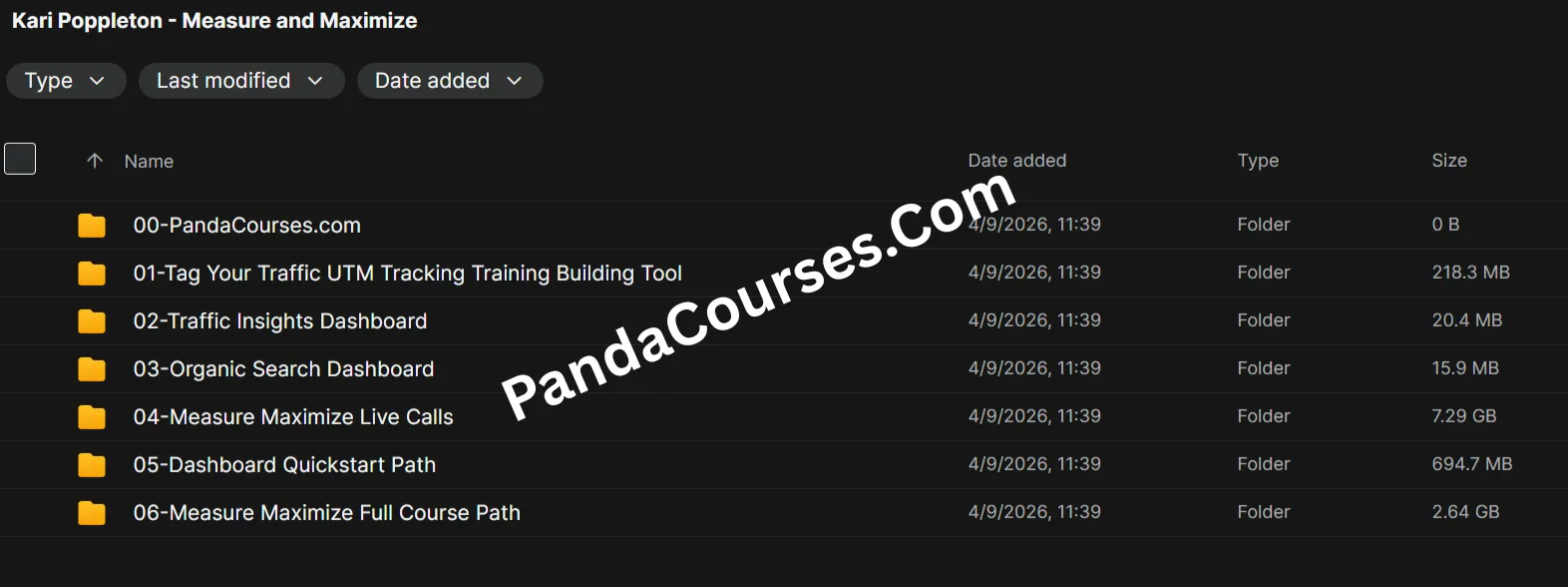
Preview of the course materials.
Course Details
If you're running a business based on assumptions instead of data, you're not alone but you're also limiting your growth. Many entrepreneurs invest in ads, funnels, and content without knowing what truly drives results. This leads to wasted time, money, and energy.
The real problem isn’t effort. It’s lack of clarity.
Without accurate data, every decision feels like a gamble. You might think your marketing is working, but you can’t pinpoint why. You may see sales coming in, but you can’t replicate the process consistently. That’s not a strategy—that’s luck.
Why Most Businesses Stay Stuck in Guesswork
The Hidden Cost of Not Tracking Data
Running your business without proper measurement systems creates several problems:
You can’t identify which marketing channels generate revenue
You don’t know where your leads are coming from
You waste resources on strategies that don’t convert
You feel overwhelmed trying to piece together data manually
Even worse, you start avoiding your numbers because they feel complicated and unclear.
The Illusion of Progress
You might be making sales or signing clients, but without data, it’s impossible to know if your success is repeatable. This creates a dangerous cycle where you keep trying new tactics instead of optimizing what already works.
What Happens When You Finally Understand Your Numbers
Clarity Leads to Better Decisions
When you start tracking the right metrics, everything changes:
You know exactly where your revenue comes from
You can double down on high-performing strategies
You eliminate guesswork from decision-making
You gain confidence in every move you make
Instead of reacting emotionally to results, you start making calculated decisions backed by data.
More Profit, Less Effort
When you focus only on what works:
Your marketing becomes more efficient
Your costs decrease
Your revenue increases
Your workload becomes more focused
This is how smart businesses scale—not by doing more, but by doing better.
The Power of Business Dashboards
What Are Dashboards and Why They Matter
A dashboard is a centralized system that collects and displays your most important business data in one place. Instead of jumping between tools and spreadsheets, you get a clear overview of your performance.
Dashboards help you:
Track key metrics in real time
Identify trends and patterns
Spot problems before they grow
Make faster, smarter decisions
The Four Essential Dashboards Every Business Needs
1. Traffic Dashboard
This dashboard shows where your audience is coming from and which channels are performing best.
You’ll be able to answer:
Which platforms drive the most traffic?
Where do your leads originate?
Which campaigns generate results?
2. Funnel Dashboard
Your funnel is where conversions happen—or fail.
This dashboard helps you:
Identify drop-off points
Improve conversion rates
Fix leaks in your sales process
3. Sales Dashboard
This gives you a complete view of your revenue.
You can track:
Total sales and trends
Refund rates
Average order value
Best-selling products
4. Launch Dashboard
Perfect for campaigns and promotions, this dashboard shows:
Revenue generated during launches
Performance of email campaigns
Effectiveness of marketing strategies
How to Build a Data-Driven Business System
Step 1: Identify What to Measure
Most people track too many metrics—or the wrong ones. Focus on:
Traffic sources
Conversion rates
Revenue performance
Customer behavior
Step 2: Set Up Tracking Tools
You need proper tools to collect accurate data. This includes:
Analytics platforms
Event tracking systems
Conversion tracking setups
Without proper setup, your data will be unreliable.
Step 3: Build Automated Dashboards
Manual reporting is inefficient and unsustainable. Automation ensures:
Real-time updates
Accurate reporting
Less time spent on data collection
Step 4: Turn Data into Actionable Insights
Data alone is useless unless you act on it.
You need a system to:
Analyze trends
Identify opportunities
Test improvements
Optimize continuously
Common Mistakes That Kill Business Growth
Overcomplicating Analytics
You don’t need dozens of tools or complex systems. Simplicity wins. Focus on the metrics that directly impact revenue.
Ignoring Data Because It Feels Overwhelming
Avoiding your numbers doesn’t make problems disappear. It makes them worse.
Chasing New Strategies Instead of Optimizing Existing Ones
Most businesses don’t need new ideas—they need better execution of what already works.
Who Needs a Data Measurement System?
This Is Essential If You:
Run ads or plan to invest in paid traffic
Sell digital products, services, or courses
Want to scale your business sustainably
Feel busy but not profitable
Struggle to understand your performance
If you’re serious about growth, data isn’t optional—it’s mandatory.
The Real Competitive Advantage: Clarity
Why Data Beats Intuition
Relying on intuition alone is risky. Data gives you:
Proof instead of assumptions
Direction instead of confusion
Control instead of chaos
Build a Business That Runs on Systems
When your business is driven by data:
You stop reacting and start planning
You reduce stress and increase confidence
You scale with precision, not guesswork
Final Thoughts: Stop Wasting Effort on What Doesn’t Work
Here’s the uncomfortable truth:
If you’re not measuring your business properly, you’re wasting resources—whether you realize it or not.
You don’t need more tools.
You don’t need more strategies.
You need clarity.
Once you understand what’s working, everything becomes easier. Your marketing improves. Your decisions get sharper. Your results become predictable.
That’s how real growth happens.
What Our Customers Say
Real feedback from real customers.
Tap a screenshot to enlarge.
Get all 117+ courses with one payment
Lifetime access. New courses included.
7-day money-back guarantee · Refund Policy