
Daniel Raim - Documentary Storytelling and Scriptwriting 101 Essentials
by Daniel Raim
Daniel Raim – Documentary Storytelling and Scriptwriting 101 Essentials is a practical guide for filmmakers who want to create compelling, fact-driven documentaries. This course breaks down how to find strong stories, structure narratives, and write scripts that balance creativity with accuracy. You’ll learn research techniques, interview strategies, and visual storytelling fundamentals that elevate your work beyond basic content. It also covers editing, sound design, and ethical filmmaking practices to ensure credibility and impact. Whether you're a beginner or improving your craft, this course provides clear, real-world insights to help you produce documentaries that engage audiences and stand out professionally.
Read more ↓Get this course plus 117+ more with Lifetime Access.
Get Lifetime Access – $997-day money-back guarantee · Refund Policy
WHAT'S INSIDE
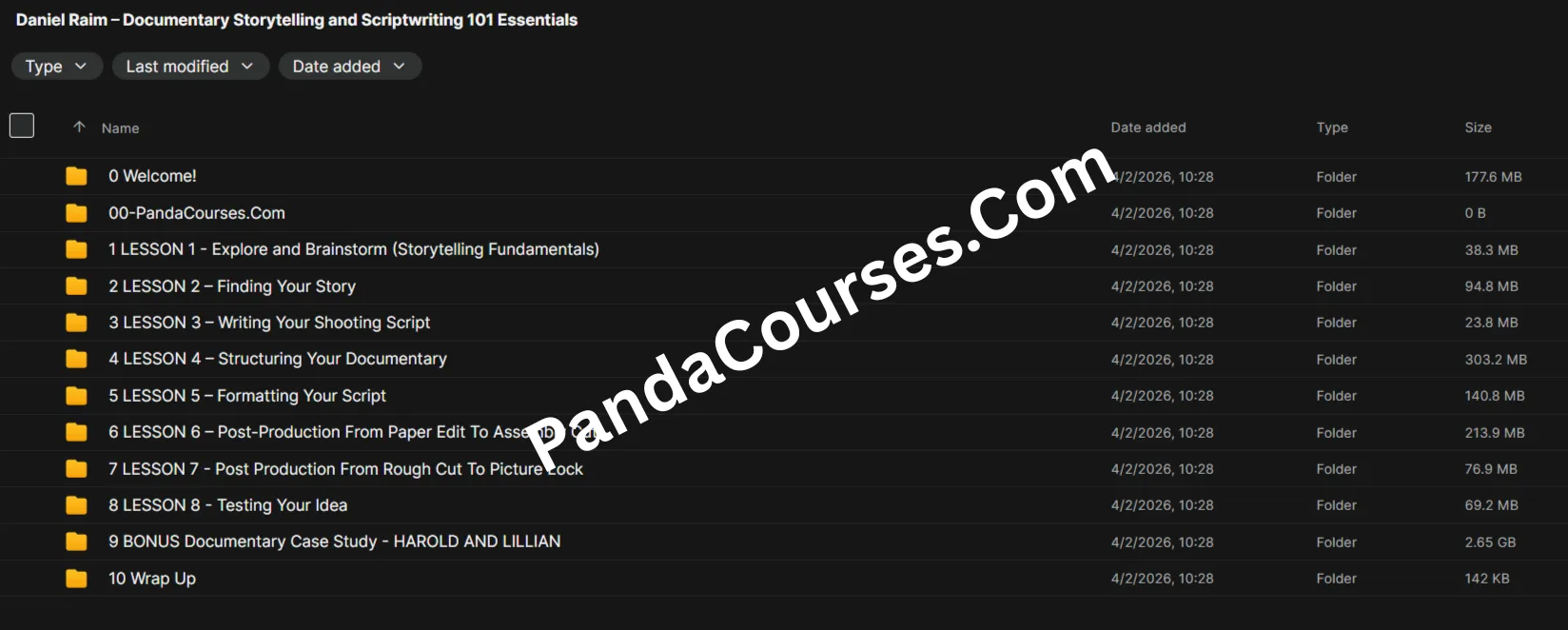
Preview of the course materials.
Course Details
Documentary filmmaking is not just about presenting facts it’s about transforming reality into a compelling narrative that resonates with audiences. Daniel Raim – Documentary Storytelling and Scriptwriting 101 Essentials offers a structured approach to mastering this craft. Inspired by the techniques and experience of filmmaker Daniel Raim, this course teaches how to combine storytelling, research, and visual language to create impactful documentaries.
Why Story is the Foundation of Every Documentary
Understanding Narrative Power
At the core of every successful documentary lies a strong story. Without it, even the most important subject matter feels dull and disconnected. This course emphasizes identifying meaningful narratives within real-world events and structuring them effectively.
Structuring Compelling Stories
A well-structured documentary follows a clear arc—introduction, development, and resolution. You’ll learn how to:
Identify central themes
Build emotional engagement
Maintain audience interest from start to finish
Mastering Documentary Scriptwriting
Balancing Creativity with Accuracy
Scriptwriting in documentaries is fundamentally different from fiction. You’re not inventing—you’re shaping reality. This course teaches how to:
Maintain factual integrity
Craft engaging narratives
Ensure clarity and flow
Writing for Visual Storytelling
Unlike traditional writing, documentary scripts must align with visuals. Every word should support what the audience sees, not repeat it. This discipline separates amateur work from professional storytelling.
The Role of Research and Fact-Checking
Building Credibility Through Accuracy
If your facts are weak, your documentary collapses—no matter how cinematic it looks. Rigorous research is non-negotiable. This course trains you to:
Use reliable sources
Verify information thoroughly
Avoid misinformation pitfalls
Developing a Research Workflow
Efficient research isn’t random. It requires a system:
Source collection
Data verification
Narrative alignment
This ensures your story remains both engaging and truthful.
Conducting Effective Interviews
Preparing for Interviews
Interviews are often the backbone of documentaries. Poorly conducted interviews destroy credibility and flow. You’ll learn how to:
Prepare targeted questions
Understand your subject deeply
Set clear objectives for each interview
Getting Authentic Responses
People don’t open up automatically. You must create the right environment:
Build trust with subjects
Ask open-ended questions
Listen actively instead of forcing narratives
Crafting a Strong Visual Narrative
Visual Storytelling Fundamentals
A documentary isn’t a podcast with images—it’s a visual experience. This course teaches:
Shot composition
Camera movement
Visual symbolism
Enhancing Emotional Impact
Strong visuals amplify emotions without saying a word. You’ll understand how to use:
Lighting
Framing
Visual metaphors
This is where average filmmakers fail—they rely too much on dialogue instead of visual storytelling.
Post-Production and Editing Techniques
Where the Story Comes Together
Editing is where your documentary is truly built. Raw footage means nothing until it’s structured properly. This course covers:
Selecting impactful footage
Creating narrative flow
Maintaining pacing
Using Sound and Music Effectively
Audio is often underestimated but critical. You’ll learn how to:
Use background music strategically
Enhance emotion through sound design
Avoid overuse that distracts viewers
Ethical Considerations in Documentary Filmmaking
Maintaining Integrity
If you manipulate facts or misrepresent subjects, you lose credibility instantly. Ethics are not optional—they define your reputation.
Respecting Subjects and Truth
The course highlights:
Fair representation of individuals
Avoiding bias
Transparency in storytelling
Ignoring ethics might give short-term attention but destroys long-term trust.
Breaking into the Documentary Film Industry
Challenges You Must Face
The industry is competitive. Talent alone won’t get you in. You need strategy:
Securing funding
Building networks
Understanding distribution channels
Learning from Proven Paths
Analyzing successful filmmakers like Daniel Raim helps you understand what actually works—not theoretical advice, but real-world execution.
Conclusion: Building Impactful Documentaries That Matter
Creating a powerful documentary requires more than technical skill—it demands discipline, structure, and clarity of purpose. This course equips you with the tools to:
Tell compelling real-world stories
Maintain factual accuracy
Engage audiences visually and emotionally
If you’re serious about documentary filmmaking, you need to stop treating it like casual content creation. It’s a craft that requires precision, research, and intentional storytelling. Master these essentials, and you move from just recording reality to shaping meaningful narratives that actually impact people.
What Our Customers Say
Real feedback from real customers.
Tap a screenshot to enlarge.
Get all 117+ courses with one payment
Lifetime access. New courses included.
7-day money-back guarantee · Refund Policy